

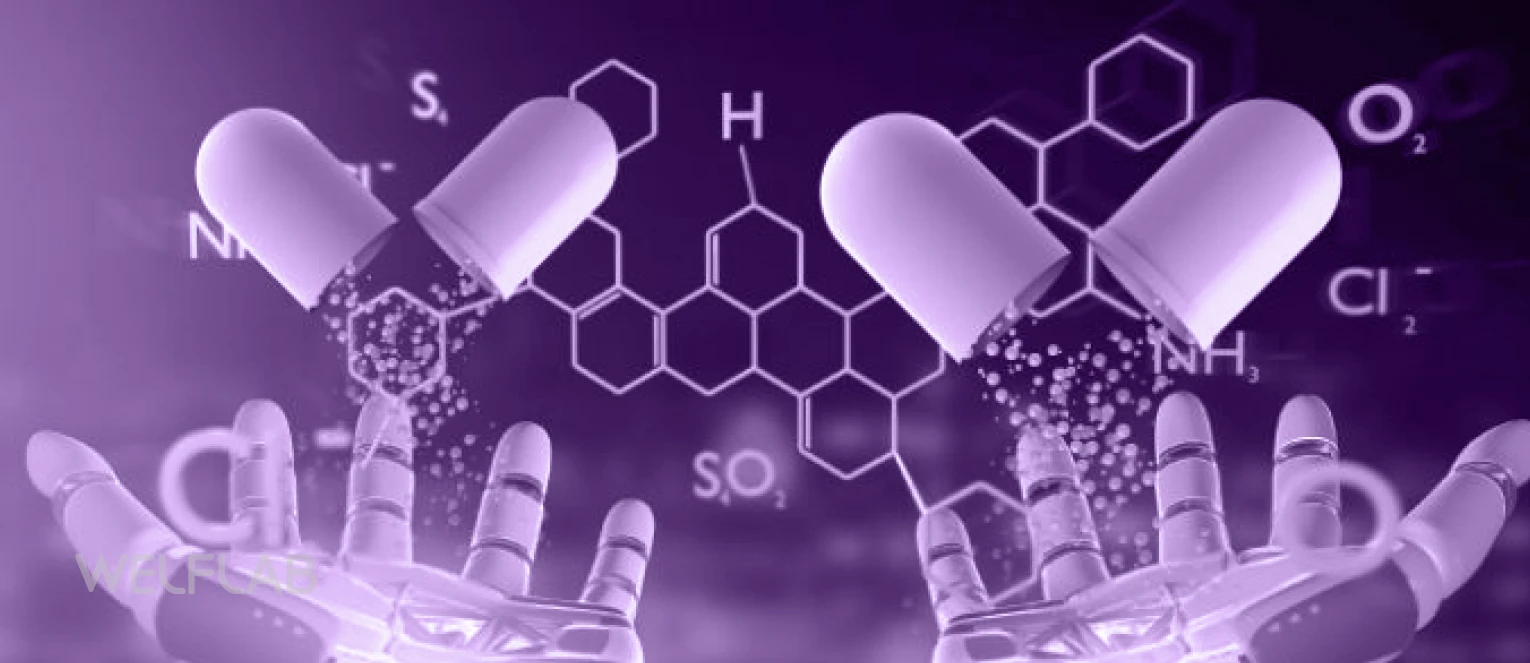
A drug-like molecular collection can comprise 1023-1060 compounds, of which only about 1012 can be produced in laboratories. However, finding the most intriguing possibilities within their expected biological activities is difficult for investigators since their absorption, distribution, metabolism, excretion, and toxicity (ADMET) qualities are typically tough to predict and adjust. This is frequently an obstacle for subsequent investigations and implementations. It would be more efficient to generate potential compounds rather than screen from archives, with adequate the ADMET qualities as requirements at the start of the molecular creation procedure. In recent years, predictive algorithms utilizing neural networks (AI) have been presented for creating drug candidates using prior biological and chemical knowledge. Insilco Medicine, a biotechnology startup, used a mix of AI generative approaches and reinforcement learning methods to effectively create DDR1 kinase inhibitors to cure fibrosis in only 21 days. I will show how reinforcement learning (RL) algorithms can be used in generative AI to improve real-world performance while making greater use of contemporary networked equipment capabilities.
Generative AI can expedite that target identification and validation process by mining extensive biomedical data. It can identify potential drug targets by analysing genetic information, protein- protein interactions and disease pathways. Furthermore, AI can predict the likelihood of a target’s success based on its biological relevance and potential draggability.
One of the most promising applications of generative AI in drug discovery is the rapid generation of novel molecules. AI models can generate chemical structures that have the potential to interact with specific targets. This reduces the need for exhaustive screening of chemical libraries, saving time and resources.
Generative AI can also optimize lead compounds by predicting their pharmacokinetic properties, such as absorption, distribution, metabolism, and excretion (ADME). This ensures that potential drug candidates are more likely to succeed in subsequent stages of development.
Preclinical and Clinical Testing
AI is essential for predicting the safety and efficacy of medication candidates. Large datasets of preclinical and clinical data can be analysed by algorithms that employ machine learning to discover potential adverse effects or forecast how a medicine will behave in humans. This proactive strategy lowers the possibility of late-stage failures.
Furthermore, AI can aid in patient stratification during clinical trials by identifying subpopulations that are more likely to respond favourably to a medicine. As a result, clinical studies become quicker and affordable.

Existing Drug Repurposing
Generative AI can also be used to discover novel usages for present medications. AI can identify chances to repurpose medications for various purposes by analyzing massive databases of drug-disease connections and chemical reactions. This not only speeds up the procedure for developing drugs, but it also lowers the risks related to creating wholly new chemicals.
Data Exchange and Interaction
Another key advantage of generative AI in drug discovery is the capacity for investigators and pharmaceutical corporations to collaborate and share data more easily. Artificial intelligence (AI) algorithms can examine heterogeneous information from numerous sources, revealing insights that would otherwise be concealed. The coordinated strategy may result in more strong drug discovery efforts and pooling of assets to combat complicated diseases.
Ethical Issues and Difficulties
While artificial intelligence (AI) that generates has enormous potential for drug development, it is not without hurdles and ethical concerns. Data privacy, AI model bias, and regulatory impediments are just a few of the issues that must be addressed.
Furthermore, the use of AI in drug discovery necessitates a shift in thinking as well as a commitment to data sharing and collaboration. To fully realize the potential of AI, the pharmaceutical sector must adopt a more open and collaborative approach.
The Medical Drug Development of the Future.
Finally, generative AI is a paradigm change in pharmaceutical drug discovery. It has the ability to speed up the process, cut expenses, and raise the chances of success. We should expect a more efficient and successful way to producing life-saving pharmaceuticals as AI evolves and integrates with traditional drug research efforts.
The combination of human experience with AI-driven insights will accelerate drug discovery innovation, resulting in the speedy development of medicines for a wide spectrum of ailments. We are poised to uncover new possibilities and transform the future of medicine in this era of technological innovation. The mission to develop revolutionary drugs becomes an exhilarating and hopeful undertaking with generative AI as our ally.